Many people search for “gardner or gardener” because they are not sure which spelling is correct. The two words look very similar. They sound almost the same when spoken. This often causes confusion in writing, emails, school work, and online content.
The confusion becomes even bigger because both words can be found online. One spelling is a common job title. The other is often a surname. If you use the wrong one, your writing may look incorrect. It can also confuse readers.
People want a quick answer. They want to know which spelling is right and when each word should be used. This article explains everything in simple language. You will learn the meaning of each word, where the words come from, and how spelling rules work in different English-speaking countries.
By the end, you will know exactly when to use “gardener” and when “Gardner” is correct. You will also see real examples, common mistakes, and helpful tips for everyday writing.
Gardner or Gardener – Quick Answer
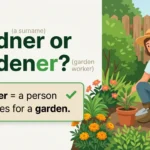
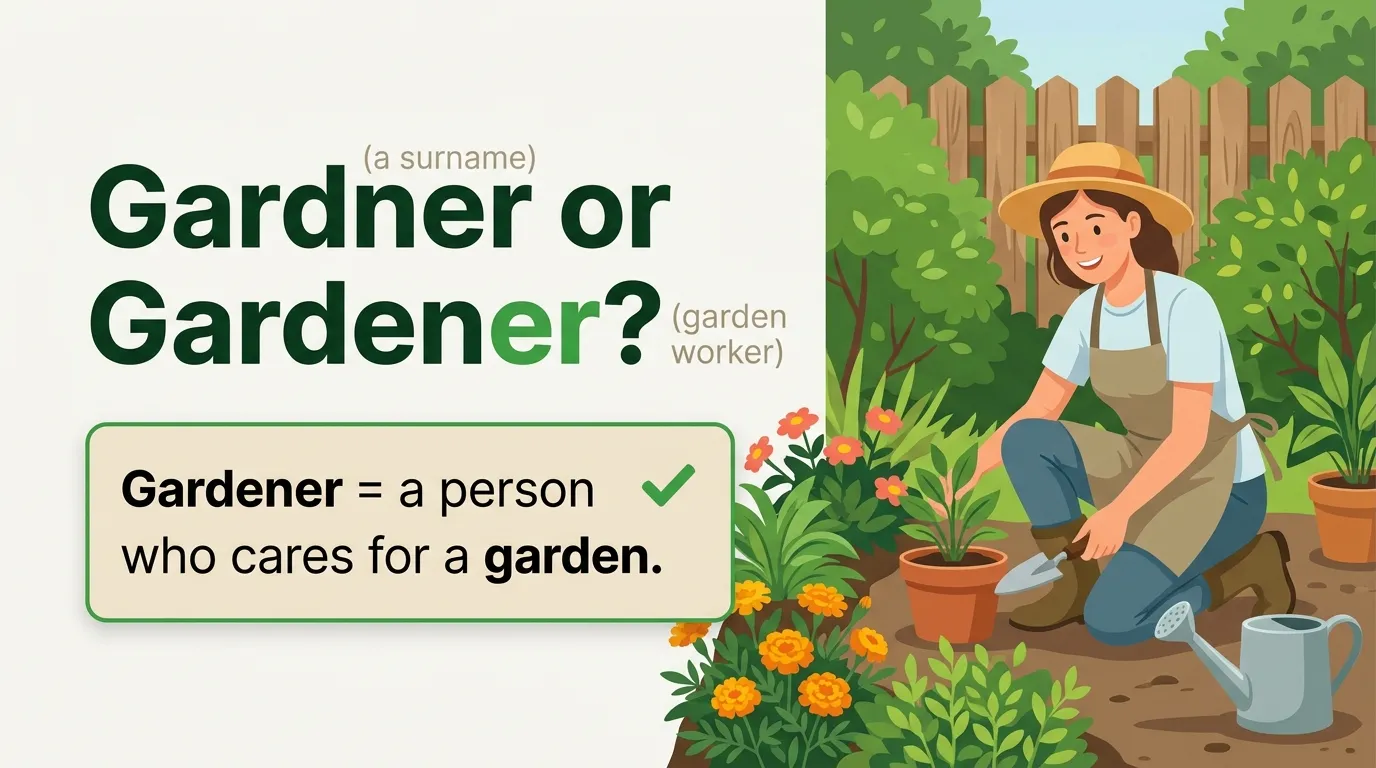
The correct word for a person who grows and cares for plants is gardener.
A gardener works in gardens, parks, homes, and other outdoor spaces. For example:
“John is a gardener who takes care of flowers and trees.”
Gardner is usually a surname or family name. For example:
“Sarah Gardner works at the local newspaper.”
If you are talking about someone whose job is caring for plants, use gardener.
If you are referring to a person’s last name, use Gardner.
| Word | Meaning | Example |
| Gardener | A person who works in a garden | The gardener planted roses. |
| Gardner | Usually a surname | Mr. Gardner visited the school. |
The Origin of Gardner or Gardener
The word gardener comes from the word “garden.” It has been used in English for many hundreds of years. The ending “-er” means a person who does a task. A gardener is a person who works in a garden.
The surname Gardner has old roots as well. Long ago, many family names came from jobs. A person who worked in gardens could become known as Gardner. Over time, the name stayed in families and became a surname.
This is why the two words look so similar today.
The spelling difference exists because one word became a common noun, while the other became a family name. Even though they share the same history, they now serve different purposes in modern English.
British English vs American English Spelling
In this case, British English and American English use the same spelling for the job title.
Both countries use gardener when talking about a person who cares for plants.
The confusion does not come from British and American spelling rules. It comes from mixing up the common noun with the surname.
Here are some examples:
British English:
“The gardener is cutting the hedge.”
American English:
“The gardener is mowing the lawn.”
Both sentences use the same spelling.
| Usage | British English | American English |
| Job title | Gardener | Gardener |
| Family name | Gardner | Gardner |
| Correct for plant care worker | Yes | Yes |
| Correct as surname | Yes | Yes |
Unlike words such as colour and color, gardener does not change between British and American English.
Which Spelling Should You Use?
The spelling you should use depends on what you mean.
Use gardener if you are talking about a job or role.
Use Gardner if it is a person’s surname.
For people in the United States, the United Kingdom, Canada, Australia, New Zealand, and other English-speaking countries, the rule is the same.
If your audience is global, use gardener whenever you mean someone who works with plants.
Always check names carefully. If someone’s last name is Gardner, keep that spelling exactly as written.
A good tip is to ask yourself a simple question:
“Am I talking about a job or a person’s name?”
If it is a job, use gardener.
If it is a name, use Gardner.
Common Mistakes with Gardner or Gardener
Many writers make small mistakes with these words.
One common error is using Gardner when talking about a garden worker.
Incorrect:
“The Gardner planted new flowers.”
Correct:
“The gardener planted new flowers.”
Another mistake is changing a person’s surname.
Incorrect:
“Mary Gardener won the award.”
Correct:
“Mary Gardner won the award.”
Some people also think Gardner is an American spelling and gardener is a British spelling. This is not true.
Both countries use gardener for the job title.
Another mistake is using the words without checking context.
Always look at the sentence and decide whether you are talking about a profession or a name.
Gardner or Gardener in Everyday Examples
These words appear in many types of writing.
In emails:
“The gardener will arrive tomorrow morning.”
In news articles:
“The city gardener planted hundreds of trees.”
In social media posts:
“Our gardener made the backyard look amazing.”
In business writing:
“The gardener completed all landscape maintenance tasks.”
For surnames:
“Emma Gardner shared the report.”
“Mr. Gardner attended the meeting.”
“The article was written by James Gardner.”
These examples show how easy it is to choose the correct spelling when you understand the meaning.
Gardner or Gardener – Google Trends & Usage Data
Search interest for “gardner or gardener” comes from people who want spelling help.
The word gardener is much more common in everyday English. It appears in job listings, news stories, gardening blogs, and educational content.
The word Gardner is common as a surname. Many people around the world have this family name.
Countries with strong gardening industries often use the word gardener frequently. These include the United States, the United Kingdom, Canada, Australia, and New Zealand.
Online searches usually increase during spring and summer because more people work in gardens during those seasons.
In search engines, gardener is generally used for job-related content, while Gardner is often linked to people, businesses, and family names.
Gardner and Gardener Comparison Table
| Feature | Gardener | Gardner |
| Meaning | Person who works in a garden | Usually a surname |
| Part of speech | Noun | Proper noun |
| Used as a job title | Yes | No |
| Used as a family name | Rarely | Yes |
| Common in daily writing | Very common | Common as a name |
| Example | The gardener watered the plants. | Anna Gardner wrote the book. |
FAQs
Gardener near me
A gardener near you can help with planting, pruning, lawn care, weeding, and general garden maintenance.
Gardner or gardener meaning
“Gardener” means a person who works with or takes care of gardens, while “Gardner” is usually a surname.
Is it gardner or gardener snake
The correct spelling is “gardener snake” if referring to a gardener, but “garter snake” is the correct name for the common snake.
Gardner or gardener funny
“Gardner” and “gardener” can be a funny spelling mix-up because they look and sound very similar.
Gardener job
A gardener job involves caring for plants, lawns, flowers, trees, and other outdoor spaces.
Gardener synonyms
Common synonyms for gardener include horticulturist, groundskeeper, landscaper, and garden worker.
Gardener pronunciation
“Gardener” is pronounced with the main stress on the first syllable and sounds like “GAR-den-er.”
Gardener female
A female gardener is simply called a “gardener”; the word does not change based on gender.
Conclusion
The difference between Gardner and gardener is simple once you know the meaning of each word. A gardener is a person who works with plants, flowers, lawns, and outdoor spaces. This spelling is used in both British English and American English. It is the correct choice whenever you are talking about gardening as a job or activity.
Gardner, on the other hand, is usually a surname. Many people have Gardner as their family name. When you see it with a person’s name, it should remain unchanged.
The confusion happens because both words share a similar history and sound alike. However, modern English gives each spelling a different purpose. Understanding the context makes the choice easy.
Before writing, ask whether you are talking about a profession or a person’s name. If it is a profession, use gardener. If it is a surname, use Gardner. Following this simple rule will help you avoid mistakes and make your writing clear, professional, and easy to understand.

I’m Harlan Coben, a thriller author who loves creating suspense, mystery, and unexpected twists that keep readers turning pages. On Grammerliz, I share insights about my novels, bestselling book series, writing journey, and storytelling techniques. From gripping crime mysteries to psychological thrillers, this space is where readers can explore my work, latest updates, and the world behind my stories.