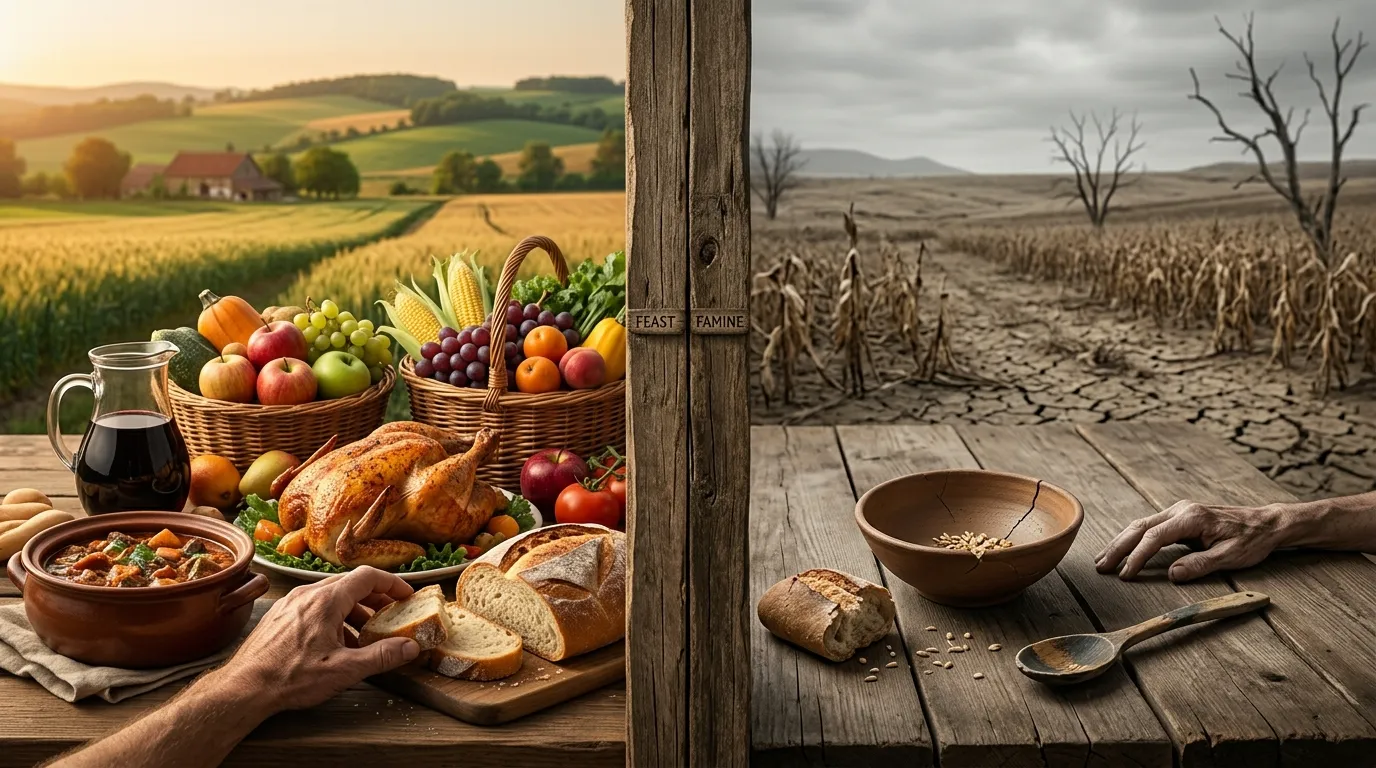
Many people search for feast or famine because they hear it in work, money, or business talks.
They want to know what it means and how to use it. This phrase does not have two spellings. It is one fixed phrase.
Feast or famine means there is either too much of something or very little of it. There is no middle ground. A person may have a lot of work one month and almost none the next month.
People also ask if they should change the words for British or American English. The answer is no. Both countries use the same phrase.
This guide will explain the meaning, history, usage, and common mistakes. It will also show examples from daily life. By the end, you will know how to use feast or famine the right way.
Feast or Famine Quick Answer
Feast or famine is an idiom.
It means having a lot of something and then having very little.
It often talks about work, money, sales, food, or business.
Example:
Our business is feast or famine. Some months are very busy. Other months are very slow.
Another example:
Freelance work can be feast or famine.
The phrase shows big ups and downs.
It does not have another spelling.
The Origin of Feast or Famine
The word feast comes from an old Latin word that means a celebration meal.
The word famine comes from a Latin word that means hunger.
People used these words many years ago.
A feast meant there was plenty of food.
A famine meant there was not enough food.
Over time, people joined the words together.
Today, the phrase is used in many areas of life.
It does not only mean food anymore.
It can also mean work, money, customers, and sales.
There are no spelling differences.
The phrase stays the same everywhere.
British English vs American English Spelling
There is no spelling difference.
British English and American English both use feast or famine.
You should not change the words.
The phrase is fixed.
| British English | American English | Correct Usage |
| Feast or famine | Feast or famine | Yes |
| Feast and famine | Feast and famine | No |
| Feasts or famine | Feasts or famine | No |
| Feast or famin | Feast or famin | No |
Example in British English:
The company has a feast or famine cycle.
Example in American English:
Our sales are feast or famine.
The phrase stays the same.
Which Spelling Should You Use?
Use feast or famine in every country.
People in the United States use it.
People in the United Kingdom use it.
People in Canada use it.
People in Australia use it.
People in many other countries use it too.
There is no need to change anything.
If your readers are global, use the same phrase.
This is the safest choice.
Audience guide:
| Audience | Phrase to Use |
| United States | Feast or famine |
| United Kingdom | Feast or famine |
| Canada | Feast or famine |
| Australia | Feast or famine |
| Global audience | Feast or famine |
Always use the same wording.
Common Mistakes with Feast or Famine
Many people make small mistakes.
These mistakes can confuse readers.
Wrong:
Our work is feast and famine.
Correct:
Our work is feast or famine.
Wrong:
We have a feast or famin season.
Correct:
We have a feast or famine season.
Wrong:
The business is feast or hunger.
Correct:
The business is feast or famine.
Do not replace words.
Do not change the phrase.
Keep it exactly the same.
Remember that it is an idiom.
Idioms should stay in their original form.
Feast or Famine in Everyday Examples
People use this phrase in many places.
You may see it in emails.
Email example:
Our sales have become feast or famine this year.
You may see it in news reports.
News example:
Farmers face a feast or famine season due to weather changes.
You may see it on social media.
Social media example:
Freelance life is feast or famine.
You may see it in formal writing.
Formal example:
The company follows a feast or famine pattern.
You may hear it at work too.
Office example:
Our projects are feast or famine.
People use it to explain big changes.
It is a common phrase.
Feast or Famine – Google Trends & Usage Data
Feast or famine is popular in many English-speaking countries.
It is common in business talks.
It is also common among freelancers.
People search for it when they want to understand work patterns.
Business owners use it often.
Writers use it too.
Countries that often use the phrase include:
| Country | Usage Level |
| United States | Very High |
| United Kingdom | High |
| Canada | High |
| Australia | High |
| New Zealand | Medium |
People often search for these topics:
| Search Topic | Reason |
| Feast or famine meaning | To learn the definition |
| Feast or famine business | To understand sales cycles |
| Feast or famine work | To explain busy and slow periods |
| Feast or famine freelance | To describe freelance jobs |
| Feast or famine examples | To learn proper usage |
The phrase is popular because many people have changing workloads.
Feast or Famine Comparison Table
| Feature | Feast | Famine |
| Meaning | A lot or plenty | Very little or none |
| Food | Large amount | Food shortage |
| Business | Many customers | Few customers |
| Work | Busy period | Slow period |
| Money | High income | Low income |
| Feeling | Success | Struggle |
Together, the phrase means moving between these two states.
FAQs
What does feast or famine mean?
It means having too much of something and then having very little.
Is feast or famine an idiom?
Yes.
It is a common English idiom.
Is feast or famine used in business?
Yes.
Businesses often use it to describe sales patterns.
Is there a British spelling?
No.
British English and American English use the same phrase.
Can I use feast or famine in formal writing?
Yes.
It is acceptable in reports, articles, and business writing.
Why do freelancers use this phrase?
Freelancers often have very busy months and very slow months.
Should I change any word in the phrase?
No.
Always write feast or famine.
Conclusion
Feast or famine is a simple and useful English idiom. It describes times when there is either a lot of something or very little of it. People often use it when they talk about work, money, business, sales, and freelance jobs.
The phrase has stayed the same for many years. There are no British or American spelling differences. You should always write it exactly as feast or famine.
Many people make mistakes by changing words or adding new ones. Do not do this. Keep the phrase in its original form.
This idiom is popular because many people experience busy periods and slow periods in life. A company may have many customers one month and very few the next month. A freelancer may earn a lot one month and much less later.
If you write for people in the United States, the United Kingdom, Canada, Australia, or a global audience, use the same phrase. This will always be correct.
Remember one simple rule. Feast or famine is a fixed expression. Do not change it. Learn it once and use it with confidence in everyday writing.