Have you ever wondered if you should say restaurant or cafe? Many people use these words the same way.
But they mean different things. Knowing the difference helps you sound smart and clear when you write or speak.
People search for this topic a lot. They want to know: Is a cafe a restaurant? Can I call a coffee shop a restaurant? Which word is right for my business name or review?
This article gives you simple, clear answers. You will learn what each word means. You will see how they are used in real life.
You will also learn which word to use and when. By the end, you will feel confident using both words correctly. Let’s make it simple and easy to understand.
Restaurant or Cafe Quick Answer
A restaurant is a place where people go to eat full meals. They sit down. A server brings food to the table. You pay at the end. Restaurants serve lunch, dinner, and sometimes breakfast.
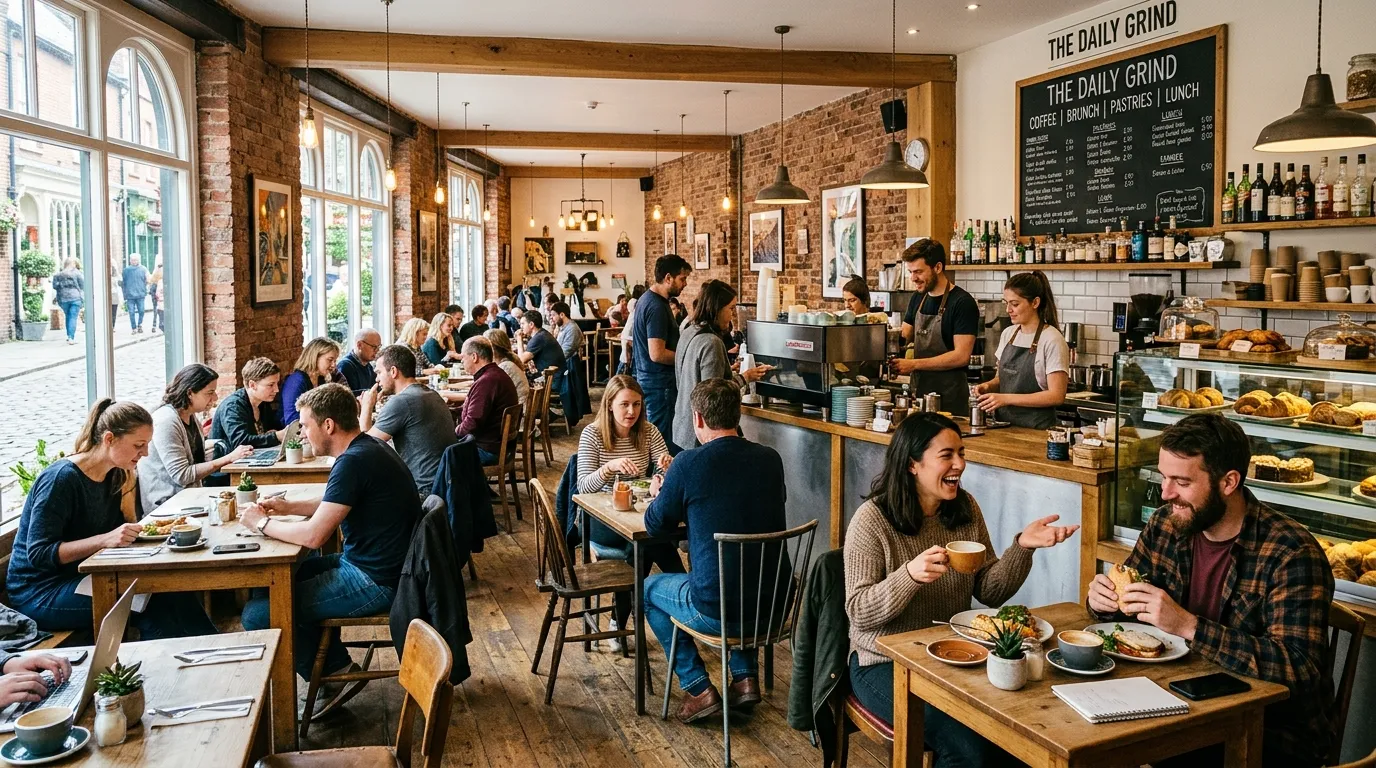
A cafe (also spelled café) is a smaller, more relaxed place. Cafes mostly serve coffee, tea, and light snacks. Some cafes also serve simple meals. But a cafe feels more casual than a restaurant.
Here are simple examples. A place that serves pasta, steak, and dessert is a restaurant. A place that serves lattes, muffins, and sandwiches is a cafe. Both are food places. But they are not the same thing.
The Origin of Restaurant or Cafe
The word restaurant comes from French. It comes from the word restaurer, which means to restore. The first restaurants opened in France in the 1700s. People went there to restore their energy with food and drink. The word came to English from French and has stayed the same since then.
The word cafe also comes from French. It comes from café, which means coffee. Cafes first became popular in Europe in the 1600s. People went to drink coffee and talk. The word spread to English-speaking countries and became very common. In English, you can spell it cafe or café. Both are correct. The accent mark (é) is from French. Many English writers drop it. Both spellings are widely accepted today.
British English vs American English Spelling
Both British and American English use the words restaurant and cafe. But there are small differences in how people spell and use them.
In American English, people write cafe without the accent. They also use the word more loosely. A diner or coffee shop may be called a cafe. The word restaurant is used for sit-down places with full menus.
In British English, people sometimes write café with the accent. They also use the word café for small coffee and snack shops. In the UK, a caff is slang for a basic, cheap cafe. The word restaurant in British English usually means a more formal eating place.
Here is a simple comparison table to help you see the differences clearly.
| Feature | Restaurant | Cafe / Café |
| Main purpose | Full meals | Coffee and light food |
| Seating style | Formal, table service | Casual, self-service or counter |
| Menu size | Large | Small |
| Meal times | Lunch and dinner | Morning and afternoon |
| Price range | Mid to high | Low to mid |
| American spelling | Restaurant | Cafe |
| British spelling | Restaurant | Café |
| Typical drinks | Water, juice, alcohol | Coffee, tea, juice |
Which Spelling Should You Use?
The answer depends on where you are and who you are writing for.
If you are writing for an American audience, use cafe without the accent. This is the most common form in the US. It looks clean and simple. Most American menus, websites, and signs use this spelling.
If you are writing for a British or Australian audience, you can use café with the accent. This form is more traditional in UK and Commonwealth countries. But cafe without the accent is also fine and widely used.
If you are writing for a global audience, use cafe without the accent. It is easy to read and widely understood everywhere. This is the safest choice for blogs, websites, and international content.
For the word restaurant, spelling stays the same in both British and American English. There is no variation. Just make sure you spell it correctly. Many people misspell it as resturant or resteraunt. Always write it as restaurant.
Common Mistakes with Restaurant or Cafe
Many people make simple mistakes with these two words. Here are the most common ones and how to fix them.
Mistake 1: Calling every food place a restaurant. Not every food place is a restaurant. A coffee shop is a cafe, not a restaurant. Use the right word for the right place.
Mistake 2: Misspelling restaurant. Many people write resturant or restaraunt. The correct spelling is restaurant. Say it slowly: res-tau-rant. That helps you spell it right.
Mistake 3: Using cafe for a fancy place. If a place has a full menu, formal seating, and table service, call it a restaurant. Don’t call it a cafe just because it sounds trendy.
Mistake 4: Forgetting the accent in formal writing. If you are writing for a British or international publication, use café with the accent. Dropping it may seem informal in some contexts.
Mistake 5: Thinking cafe and restaurant mean the same thing. They do not. A cafe is smaller and more casual. A restaurant is larger and more formal. Use each word correctly.
Restaurant or Cafe in Everyday Examples
Seeing these words in real sentences helps you use them better. Here are examples from different types of writing.
Email: Let’s meet at the little cafe on Main Street. They have great coffee and quiet tables.
Business review: This restaurant has an amazing menu. The pasta was perfect and the service was fast.
Social media post: Just found the cutest cafe downtown! Their lattes are everything. ☕
News article: A new restaurant opened last Friday in the city center. It serves Mediterranean food.
Formal writing: The establishment operates as a café, offering hot beverages and light refreshments to customers.
Menu or sign: Welcome to Sunrise Cafe Your morning coffee spot.
As you can see, cafe is used for relaxed, small spots. Restaurant is used for bigger, more formal places. Each word fits a different setting. Using the right one makes your writing sound natural and clear.
Restaurant or Cafe Google Trends and Usage Data
Both words are searched millions of times every month. But they are searched for different reasons.
Restaurant is searched more often. People look for restaurants when they want a full meal. Searches like best restaurant near me or Italian restaurant in London are very common. The word restaurant is more popular in North America, Europe, and Australia.
Cafe is also searched very often. People search for cafes when they want coffee, a quiet place to work, or a light snack. Searches like cafe near me or best cafe for working are popular worldwide. The word cafe is especially popular in Asia, the Middle East, and Europe.
Here is a quick comparison of search and usage trends.
| Word | Most Searched In | Common Search Type | Typical Context |
| Restaurant | USA, UK, Canada | Best restaurant near me | Full meals, dinner plans |
| Cafe | UK, Australia, India, UAE | Cafe near me to work | Coffee, brunch, light food |
| Café (with accent) | France, UK, global blogs | Café culture, café au lait | Formal or European context |
Google data shows that restaurant is used more in formal writing and reviews. Cafe is used more in casual posts, lifestyle content, and social media. Both words are growing in use as food culture becomes more popular worldwide.
FAQs
Q1: Is a cafe the same as a restaurant?
No. A cafe is smaller and more casual. It mainly serves coffee and light food. A restaurant serves full meals with table service. They are similar but not the same.
Q2: Can a cafe also be a restaurant?
Yes, sometimes. Some places serve coffee in the morning and full meals at lunch or dinner. These may call themselves a cafe-restaurant or bistro. But in general, the two words describe different types of places.
Q3: How do you spell cafe correctly?
You can write it as cafe or café. Both are correct. In American English, cafe without the accent is more common. In British English, café with the accent is sometimes preferred.
Q4: Why do people misspell restaurant?
Because it is a long word with unusual spelling. People often write resturant or restaraunt. The correct way is restaurant. Break it into parts: res + tau + rant. This helps you remember it.
Q5: Which word is better for SEO restaurant or cafe?
It depends on your content. If you run a coffee shop, use cafe. If you serve full meals, use restaurant. Use the word that matches your business. Both words get high search traffic. Pick the one that fits your place best.
Q6: Is bistro the same as a cafe?
A bistro is similar to a cafe but usually serves more food. A bistro is a small, casual restaurant. A cafe mostly serves drinks and snacks. A bistro is between a cafe and a full restaurant.
Q7: Which word should I use on my business name or website?
Use the word that best describes your place. If you serve coffee and light food, use cafe. If you serve full meals, use restaurant. This helps customers know what to expect before they visit.
Conclusion
Now you know the difference between a restaurant and a cafe. A restaurant is a formal place for full meals. A cafe is a casual spot for coffee and light food. Both words are useful. Both are common. But they are not the same.
Use restaurant when you talk about a place with a big menu and table service. Use cafe when you talk about a cozy coffee spot or snack place. Spell restaurant as r-e-s-t-a-u-r-a-n-t. Spell cafe as c-a-f-e or c-a-f-é. Both cafe spellings are fine.
If you are writing for an American audience, drop the accent. If you are writing for British or global readers, the accent is a nice touch. Most importantly, use the word that fits the place you are describing.
These are simple words. But using them correctly makes a big difference. It makes your writing clear, professional, and easy to understand. Now go ahead and use them with confidence!

I’m Harlan Coben, a thriller author who loves creating suspense, mystery, and unexpected twists that keep readers turning pages. On Grammerliz, I share insights about my novels, bestselling book series, writing journey, and storytelling techniques. From gripping crime mysteries to psychological thrillers, this space is where readers can explore my work, latest updates, and the world behind my stories.