Have you ever typed stuffie and wondered if you spelled it wrong? You are not alone. Many people search for this word and feel confused.
Is it stuffie or stuffy? Do they mean the same thing? Or are they two different words?
This is a very common question. People search for it when they write cards, posts, or stories.
Parents search for it when they talk about their child’s favorite toy. Writers search for it when they want to spell it right.
Here is the good news. Both words exist. But they do not always mean the same thing. Stuffy is an older, more common word.
Stuffie is newer and more playful. Knowing the difference helps you write with confidence. This article will explain both words in simple terms. You will know exactly which one to use and when.
Stuffie or Stuffy Quick Answer
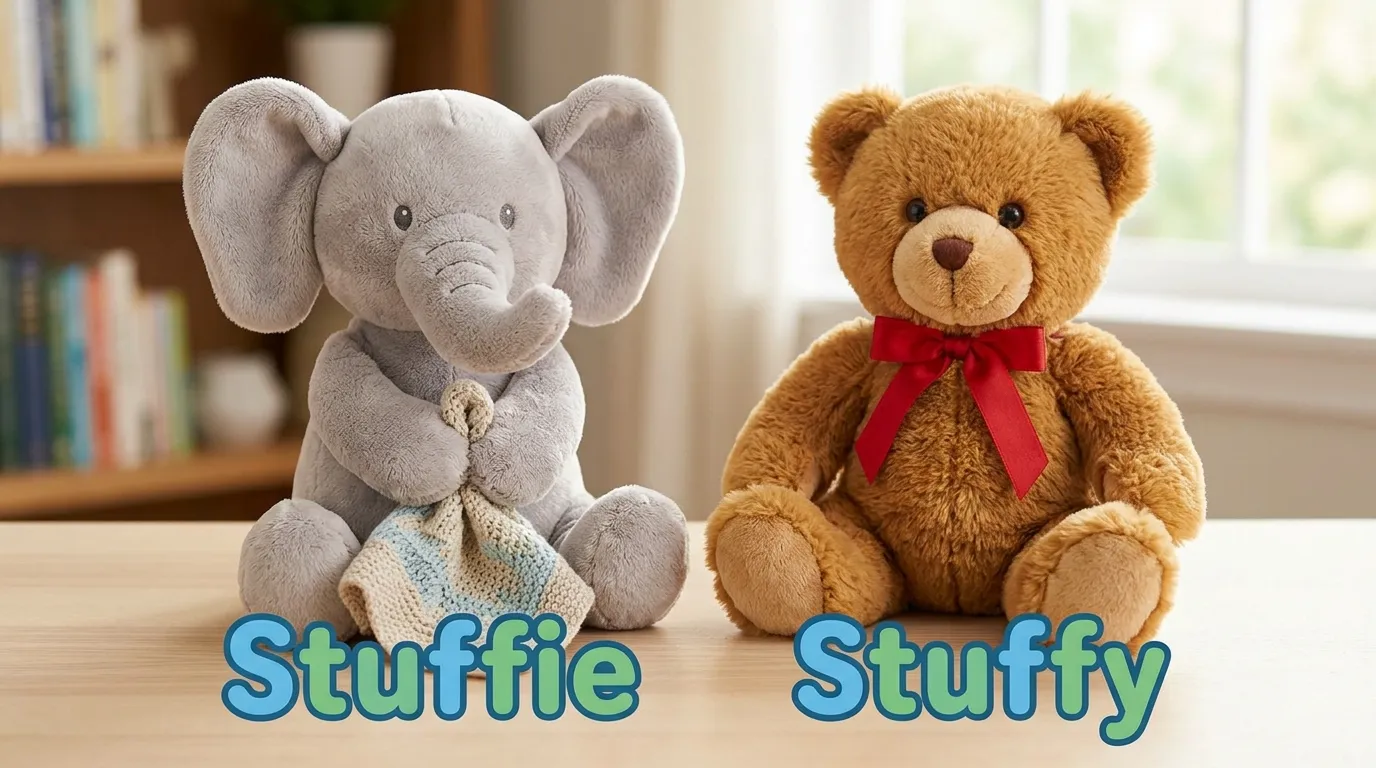
A stuffie is a stuffed animal or soft toy. Kids love stuffies. They hug them, sleep with them, and carry them everywhere. The word stuffie is fun and casual. It is used a lot in North America.
A stuffy can mean the same thing a stuffed toy. But stuffy also has other meanings. It can describe a room with no fresh air. It can also describe a person who is too serious or old-fashioned. For example: The room felt stuffy. Or: He was too stuffy to laugh at the joke.
So, stuffie usually means only a soft toy. Stuffy can mean a soft toy OR something else. If you are talking about a child’s plush toy, both words work. But stuffie is clearer and more modern.
The Origin of Stuffie and Stuffy
The word stuffy has been around for a long time. It comes from the word stuff, which means to fill something tightly. People have used stuffy since the 1800s. Back then, it meant a room filled with stale air. Later, it came to describe people who were stiff and unfriendly.
The word stuffed animal came later. People started calling plush toys stuffed animals because they were filled with soft material. Over time, people made this shorter. They said stuffed toy or just stuffy.
Stuffie is even newer. It became popular in the early 2000s. Parents and children started using it as a cute, easy way to say stuffed animal. It spread online through parenting blogs, YouTube, and social media. Today, stuffie is widely used in Canada and the United States.
The spelling difference is simple. Stuffy follows the classic rule: drop the e and add y. Stuffie adds ie instead, which gives it a softer and more playful sound.
British English vs American English Spelling
Spelling rules differ between British and American English. This is one reason people get confused between stuffie and stuffy.
In American and Canadian English, both stuffy and stuffie are used. Stuffie is especially popular in Canada. Many Canadian parents and teachers use it. In the United States, stuffy is more traditional, but stuffie is growing fast.
In British English, stuffy is the standard word. It is used for both the toy meaning and the airless room meaning. British writers rarely use stuffie. It feels too informal or too North American to them.
Here is a simple comparison table:
| Feature | Stuffie | Stuffy |
| Spelling Style | Modern / Playful | Traditional |
| Meaning | Stuffed toy only | Stuffed toy + airless room + serious person |
| Popular In | Canada, USA | UK, Australia, USA |
| Tone | Casual, cute | Neutral to formal |
| Age of Word | New (2000s) | Old (1800s) |
| Used by Kids | Very often | Sometimes |
| Used in Writing | Blogs, social media | News, books, formal text |
Which Spelling Should You Use?
The right spelling depends on who you are writing for. Think about your audience first.
If you live in the United States or Canada, you can use either word. Stuffie feels warm and friendly. Use it in parent blogs, children’s books, and social media posts. Stuffy also works, but it may feel older or more formal.
If you write for a British or Australian audience, use stuffy. It is the expected spelling. Using stuffie may confuse your readers or seem too informal.
If you write for a global audience, use stuffy. It is understood in more places. It also has fewer chances of being misread.
If you write for children or families, stuffie is a great choice. It sounds gentle and fun. Kids relate to it easily.
The safest rule: use stuffy in formal writing and stuffie in casual or child-friendly content.
Common Mistakes with Stuffie and Stuffy
People make a few mistakes with these words. Here are the most common ones.
One mistake is using stuffie in formal writing. If you write a report or a news article, stuffie may look unprofessional. Use stuffed animal or plush toy instead.
Another mistake is thinking stuffie and stuffy always mean the same thing. They do not. Stuffy can describe a room or a person. Stuffie does not. Writing the room felt stuffie is wrong. The correct word is stuffy.
Some people also spell it stuffey or stufie. These are both wrong. The correct spellings are stuffie or stuffy. No other spelling is accepted.
Also, do not mix spellings in the same piece of writing. Pick one and stick with it. Changing between stuffie and stuffy in the same text looks like an error.
Stuffie and Stuffy in Everyday Examples
Seeing words in real sentences helps. Here are some examples from different types of writing.
In a social media post: My daughter never goes to bed without her stuffie. It’s the cutest thing!
In a children’s story: Lily hugged her stuffie tight and closed her eyes.
In an email to a teacher: Could you please make sure Jamie has his stuffy during rest time? It helps him feel calm.
In a news article: The charity collected over 500 stuffed animals, giving each child a soft stuffy to keep.
In everyday speech: It’s so stuffy in here can we open a window? (Here, stuffy means bad air, not a toy.)
In a parenting blog: We have a whole basket of stuffies by the bed. My kids can’t sleep without them!
These examples show how the word fits into real life. The tone of your writing guides your choice.
Stuffie or Stuffy Google Trends and Usage Data
Google Trends shows interesting data about these two words. Stuffy is searched far more often worldwide. This makes sense because it has more meanings and has been used longer.
However, stuffie has grown fast since 2010. Searches for stuffie spike in Canada and the United States. They are highest in the months before holidays like Christmas. This is when parents search for gift ideas like plush toys.
In the United Kingdom and Australia, stuffy stays more popular. Stuffie barely appears in those countries on search charts.
On social media, stuffie wins. The hashtag #stuffie has millions of posts on Instagram and TikTok. Parents share photos of their children’s toy collections. The word feels warm and personal online.
Here is a quick usage comparison by region:
| Region | Preferred Word | Common Use |
| Canada | Stuffie | Parenting, kids’ content |
| United States | Both (Stuffie growing) | Blogs, social media, stores |
| United Kingdom | Stuffy | Everyday speech, formal writing |
| Australia | Stuffy | General use |
| Global Web | Stuffy | News, formal content |
FAQs
What is a stuffie?
A stuffie is a soft, stuffed toy like a teddy bear or a plush animal. Children love stuffies because they are soft and comforting.
Is stuffie a real word?
Yes, it is a real word. It may not appear in every dictionary yet, but it is widely used and understood in North America.
What does stuffy mean?
Stuffy has three meanings. It can mean a stuffed toy. It can describe a room with no fresh air. It can also describe a person who is too serious or old-fashioned.
Are stuffie and stuffy the same word?
They are related but not the same. Both can refer to a soft toy. But stuffy has extra meanings that stuffie does not have.
Which spelling is correct for a child’s toy?
Both are correct. Stuffie is more modern and playful. Stuffy is more traditional. Choose based on your audience and tone.
Can I use stuffie in formal writing?
It is better to avoid it in formal writing. Use stuffed animal or plush toy instead. Stuffie is best for casual, friendly, or child-focused content.
Why do British people not use stuffie?
Stuffie is mostly a North American word. British English kept the older spelling stuffy. The two versions developed in different places over time.
Conclusion
Both stuffie and stuffy are real words. They can both mean a soft, stuffed toy. But stuffie is newer, cuter, and used mostly in Canada and the United States. Stuffy is older and used all over the world. It also has extra meanings like bad air or a serious person.
The key is to know your audience. Use stuffie when writing for kids, parents, or a North American crowd. Use stuffy when writing for a global or formal audience. Never use made-up spellings like stuffey or stufie.
If you are not sure, stuffy is always the safer choice. It works in more places and in more types of writing.
Now you know the difference. You can write with confidence. Whether you call it a stuffie or a stuffy, that soft toy will always be loved.

I’m David Baldacci, a bestselling thriller author passionate about suspense, mystery, and unforgettable characters. Through Grammerliz.com, I share insights into my books, writing journey, popular series, and storytelling techniques. This platform connects readers with my latest releases, thrilling adventures, and the world of crime fiction that has inspired millions worldwide.