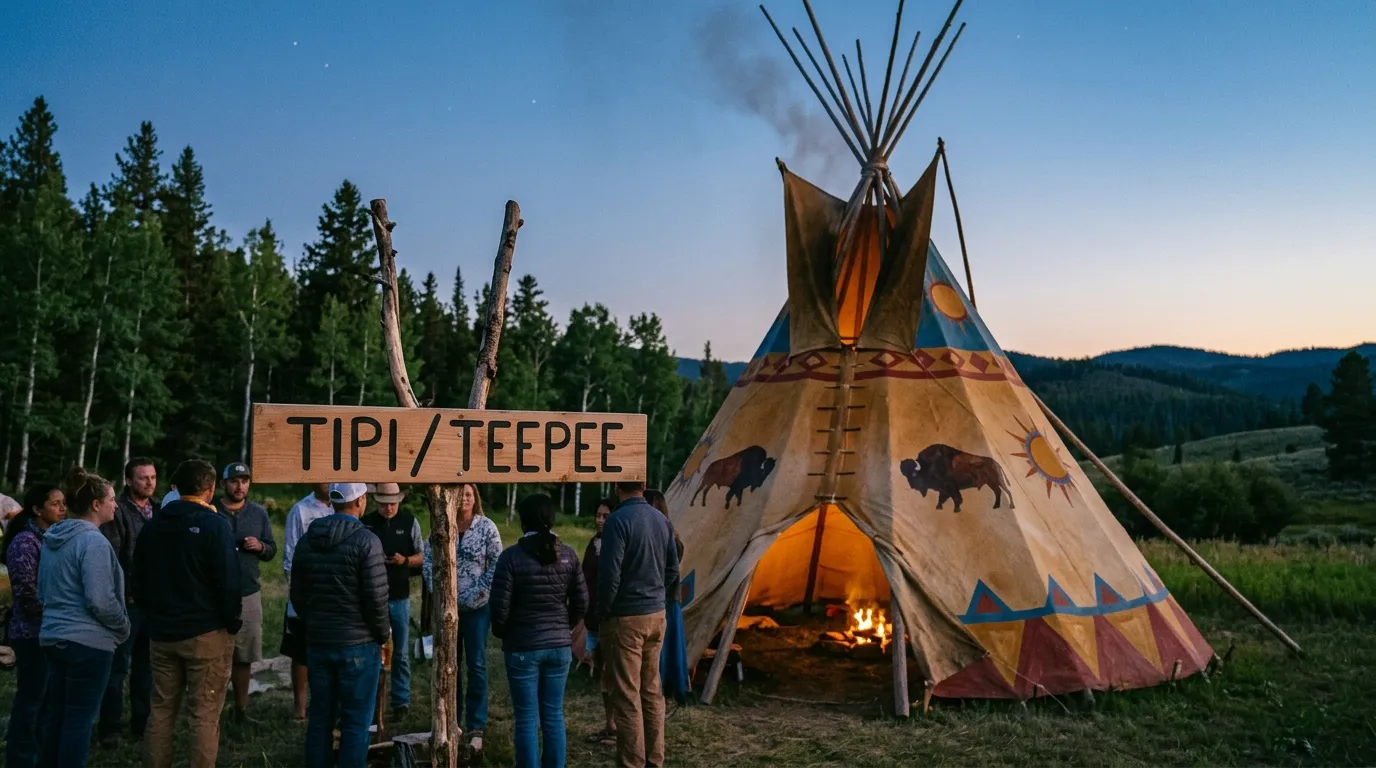
Have you ever written the word tipi and then stopped? Maybe you thought, Wait is it teepee?
You are not alone. Many people search for this exact question every day. They want to know the right way to spell it.
This word causes a lot of confusion because both spellings look correct. And the truth is both are correct! But one is used more often than the other.
This article will clear up all the confusion. You will learn where the word comes from. You will see how different countries use different spellings. All people will also get tips on which spelling to use.
By the end, you will feel sure about using this word in any kind of writing a school report, a social media post, or a news article. Let’s start simple and keep it simple.
Tipi or Teepee Quick Answer
Both tipi and teepee mean the same thing. It is a cone-shaped tent. Native American tribes used it as a home. The tent is made from animal skins or canvas. Long wooden poles hold it up. The word comes from the Lakota language. In Lakota, the word is thipi. It means they dwell or a place to live. So both spellings point to the same object and the same idea. Teepee is the most common spelling in the United States. Tipi is the spelling that experts and historians prefer. You may also see tepee. That is a third way to write it. All three spellings are found in books and online. None of them is wrong. But some are more popular in certain places and in certain types of writing.
The Origin of Tipi or Teepee
The word comes from the Lakota Sioux people. The Lakota are a Native American group from the Great Plains. Their word is thipi. It has two parts. Ti means to dwell. Pi means they. So the full word means they dwell or a home. The tipi was a very smart home. It could be built fast. It could also be taken apart fast. This was important because Plains tribes moved often to follow buffalo herds. Early European settlers heard the Lakota word and wrote it down in their own way. Some wrote tipi. Others wrote tepee or teepee. Over time, all three spellings became common. Today, tipi is the spelling most often used by Native American groups and scholars. They prefer it because it is closer to the original Lakota word. Teepee became popular in everyday English because it shows how the word sounds.
British English vs American English Spelling
Spelling differences between British and American English are very common. Words like colour and color show this well. The same thing happens with tipi and teepee. In the United States, teepee is the most popular spelling. It is used in schools, stores, and the media. In the United Kingdom and other Commonwealth countries, tipi is more common. It is also used more in academic and historical writing around the world. Tepee is used in both places but is less popular than the other two. Here is a simple table to compare all three spellings.
| Spelling | Used Most In | Style |
| Teepee | United States | Everyday, informal |
| Tipi | UK, academics, Native groups | Formal, historical |
| Tepee | Both US and UK | Informal, less common |
All three mean the same thing. The spelling you choose depends on your audience and your purpose.
Which Spelling Should You Use?
The answer depends on who you are writing for. If you are in the United States, use teepee. It is the spelling most American readers know. It is also the spelling used in most US textbooks and news sites. If you are in the United Kingdom, Canada, or Australia, use tipi. It feels more natural to readers there. If you are writing a school report or history paper, use tipi. It is closer to the original Lakota word. Historians and Native American groups prefer it. If you are writing for social media or a blog, use teepee. It is easier for most people to recognize and search for online. If you are writing for a global audience, pick one spelling and stick with it. Do not switch between spellings in the same piece of writing. Consistency is key in all good writing.
Common Mistakes with Tipi or Teepee
Many people make small errors with this word. Here are the most common ones. First, some people write tipee. This is not a real spelling. It mixes parts of tipi and teepee in a wrong way. Avoid it. Second, some people write tee-pee with a hyphen. This is not standard. Do not use a hyphen in the middle of this word. Third, some writers switch between spellings in the same article. They write teepee in one sentence and tipi in the next. This looks sloppy and can confuse readers. Pick one and stay with it. Fourth, some people think teepee is wrong because it looks informal. That is not true. It is a fully accepted spelling. Fifth, some writers over-capitalize the word and write Teepee or Tipi in the middle of a sentence. These words are not proper nouns. They do not need a capital letter unless they start a sentence.
Tipi or Teepee in Everyday Examples
Seeing the word in real sentences makes it easier to use. Here are some examples from different types of writing.
In an email: We set up a teepee in the backyard for the kids’ camping night.
In a news article: The museum opened a new exhibit showing a full-size tipi from the Lakota people.
On social media: Loving this teepee decor trend! So cute for a boho bedroom. 🏕️
In a school report: The tipi was the main shelter used by Plains tribes before the 1900s.
In a product listing: Buy our cotton teepee play tent perfect for kids ages 3 and up.
The tipi, derived from the Lakota word thipi, served as both shelter and symbol for nomadic tribes.
Each sentence uses the word in a natural way. Notice how the spelling changes based on the type of writing and the audience.
Tipi or Teepee Google Trends and Usage Data
Google Trends shows us how people search for words online. Teepee gets more searches than tipi in the United States. It is the top spelling used in American Google searches. Tipi gets more searches in the United Kingdom and Canada. Tepee gets the fewest searches of the three in most countries. In terms of books and academic writing, tipi has grown in use since the 1990s. This is because more writers began following the preferences of Native American communities. Online stores and home decor websites almost always use teepee. This is because it gets more search traffic in the US market. For SEO purposes, using teepee in content aimed at US readers is a smart choice. But adding tipi and tepee as alternate terms helps reach more readers worldwide.
| Spelling | US Searches | UK Searches | Academic Use |
| Teepee | Very High | Low | Low |
| Tipi | Low | High | High |
| Tepee | Medium | Medium | Medium |
FAQs
Is teepee or tipi the correct spelling?
Both are correct. Teepee is most common in the US. Tipi is preferred by historians and Native groups.
Where does the word tipi come from?
It comes from the Lakota Sioux word thipi, which means they dwell.
Can I use tepee instead of tipi or teepee?
Yes. Tepee is a third accepted spelling. It is less common but still correct.
Which spelling should I use for SEO?
Use teepee for US audiences. It gets the most online searches in America.
Is tipi more respectful than teepee?
Many Native American groups and scholars prefer tipi because it is closer to the original word.
Should I capitalize tipi or teepee?
No. These are common nouns. Do not capitalize them in the middle of a sentence.
Can I use both spellings in one article?
It is better to pick one and use it throughout. Mixing spellings can confuse readers.
Conclusion
Tipi and teepee are two ways to spell the same word. They both refer to the same cone-shaped tent used by Plains tribes.
The word comes from the Lakota language. It has been spelled many ways in English. Teepee is the top choice in the United States. Tipi is preferred in academic writing and by Native communities. Tepee is a third option that is less popular.
The best spelling depends on your audience. Use teepee for American readers or online content. Use tipi for formal, historical, or scholarly writing. Never use tipee or add a hyphen. Always stay consistent in your writing.
Do not switch between spellings in the same piece. Now you have all the facts you need. You can write this word with full confidence.

I’m Harlan Coben, a thriller author who loves creating suspense, mystery, and unexpected twists that keep readers turning pages. On Grammerliz, I share insights about my novels, bestselling book series, writing journey, and storytelling techniques. From gripping crime mysteries to psychological thrillers, this space is where readers can explore my work, latest updates, and the world behind my stories.